Last updated: August 2026
Footings are the support structures – stumps, piers, screw piles, or slabs – that carry a relocatable building’s load, keep it level, and compliant with the National Construction Code.
Most Important
- Common footing types for portable buildings: adjustable steel stumps, concrete pad footings, screw piles, and steel skids
- QLD sites can often need deeper footings than other states due to reactive clay soils
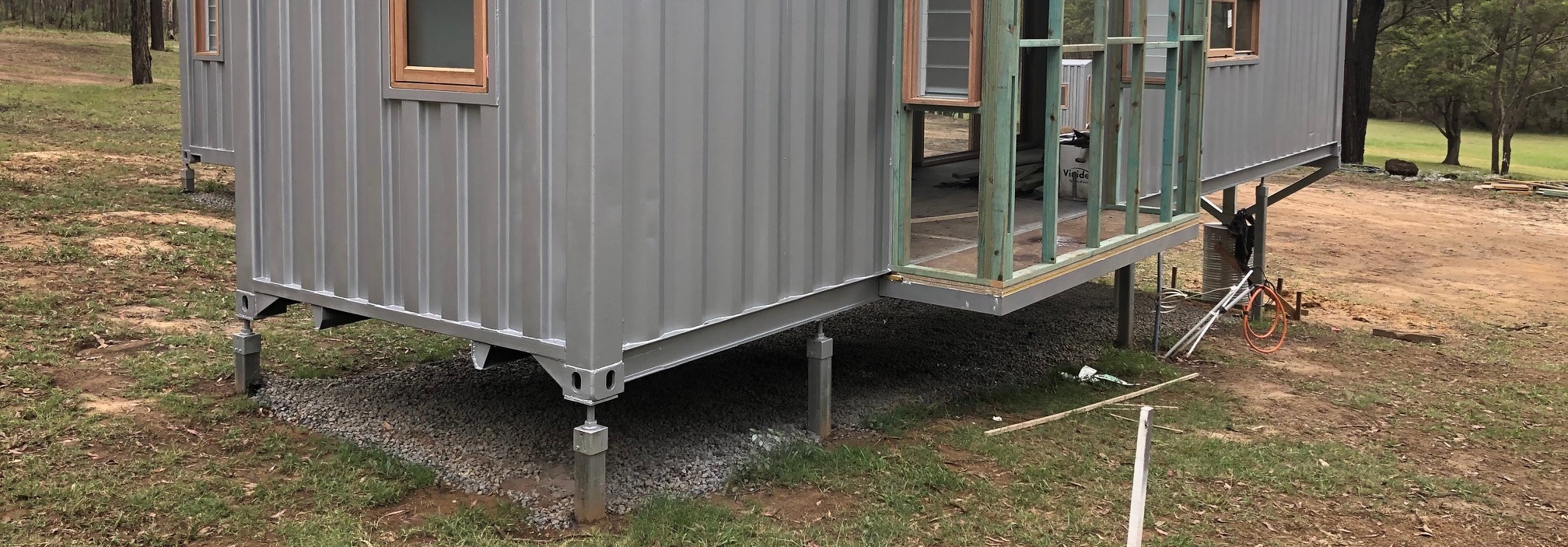
- Adjustable steel stumps are the only footing type that can be re-levelled without excavation once the building is on site
What Footing Types Are Used for Portable Classrooms and Site Offices?
The most common footing types for portable classrooms and site offices are steel skids, adjustable steel stumps, concrete pads, and screw piles. Steel skids or runners built into the building’s own chassis are the most common option for genuinely portable units, allowing the structure to be slid or craned into position with minimal site prep.
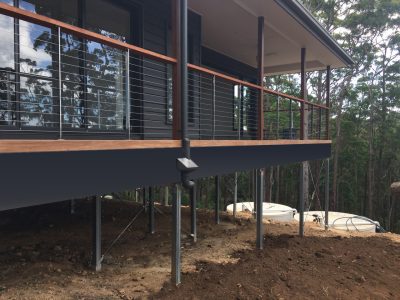
Screw piles are increasingly used on uneven rural or farm sites. Screw piles are large steel screws drilled into the ground that provide a sturdy, level base, are fast to install, and have a small environmental footprint, making them a preferred choice where uneven rural ground is common or concrete is too expensive to bring in. LevelMaster has adjustable tops for screw piles, making installation even easier.
In Queensland specifically, footings often need to be installed deeper than in other states to reach stable soil below the reactive clay zone, and any structural engineering for the footing design must be certified by a Registered Professional Engineer within the state. Source: eliteportables.com.au
Signs Your Portable Building Footings Are Inadequate
- Visible gaps opening between the footing and the ground
- Doors or windows sticking or no longer closing flush
- Floors that feel uneven or bounce underfoot
- Water pooling around or under the building after rain
- Cracking in internal linings near doorways or corners
- The building visibly leaning to one side
What Happens if Footings Aren’t Done Properly?
Inadequate footings on a portable classroom or site office can lead to uneven floor loading, doors and windows binding, and in reactive clay areas, ongoing seasonal movement as the soil beneath expands and contracts with moisture. For a building housing students or staff daily, this isn’t just a maintenance inconvenience – persistent unlevel flooring and structural movement can become a safety and compliance issue over time, and may affect the building’s certification.
For Example: QLD Reactive Clay Soil
A portable classroom installed on standard pad footings in a Brisbane suburb with reactive clay soil may need re-levelling within the first one to two wet seasons if the footing depth wasn’t specified for that soil class. The same classroom on adjustable steel stumps, installed to the correct AS 2870 site classification, can be re-levelled in a matter of hours rather than requiring the footings to be dug out and redone.
Common Mistakes with Portable Building Footings
- Assuming all sites need the same footing depth, regardless of soil classification
- Skipping site drainage grading, which accelerates footing movement and corrosion
- Choosing a fixed footing type (like concrete pads) for a building that will need to relocate later
- Not confirming council approval thresholds before ordering the building
- Under-specifying footing depth in reactive clay areas to save on install time
Frequently Asked Questions
1. What footing type is best for a portable classroom?
It depends on the site. Adjustable steel stumps suit sites likely to need re-levelling; screw piles suit uneven rural ground; concrete pads suit larger, semi-permanent installations.
2. Do portable classrooms need engineered footings?
Yes – structural footing design for a portable classroom or site office needs to be certified by a registered engineer.
3. How deep do portable building footings need to be?
Under NCC Part 3.2.5, stumps must be embedded at least 30% of their height above ground, or 450mm, whichever is greater. Reactive clay sites, common across QLD, often require deeper footings again.
4. Does a portable classroom need council approval?
It depends on size, height, and use. Structures under 10m² and 2.4m high may not need approval in some states, but educational and commercial use often triggers additional requirements – always confirm with your local council.
5. Can portable building footings be re-levelled after installation?
Adjustable steel stumps can be re-levelled on site without excavation. Concrete pads and most screw pile installations cannot be adjusted once set.
Key Takeaways
- Footing type should match the site (soil reactivity, terrain, and whether the building will relocate again)
- NCC Part 3.2.5 and AS 2870 set the minimum footing standards for stumps and reactive soil
- QLD sites commonly need deeper footings due to reactive clay
- Council approval thresholds vary by size, height, and building use – confirm locally before ordering
- Adjustable steel stumps are the only common footing type that can be re-levelled without excavation
Specifying footings for a portable classroom or site office? Our LevelMaster adjustable steel stumps are supplied Australia-wide and can be re-levelled without re-excavating the site.
See our Adjustable Steel Stumps for Tiny Homes page or get in touch to discuss your project.
Regulations referenced (NCC Part 3.2.5, AS 2870, ABCB Temporary Structures Standard) are current as of July 2026 – always confirm current requirements with your local council or certifier before construction.
Terminology Variations
Portable building footings are also referred to as: portable building foundations, relocatable building footings, demountable building footings, or transportable building footings. Portable classrooms are also called relocatable classrooms, demountable classrooms, or transportable classrooms. Site offices are also called portable offices or demountable site offices.
Glossary of Terms
Reactive soil: Soil, typically clay-based, that expands when wet and contracts when dry, requiring deeper or more robust footings to prevent structural movement.
Site classification: A rating (from A to P) under AS 2870 describing how reactive a site’s soil is, used to determine footing design.
Temporary structure: A classification under the ABCB framework for buildings intended to be relocated or removed, rather than permanently sited.
Screw pile: A steel foundation element with a helical thread, screwed into the ground to provide a stable footing point.